To understand Depression, Morality, and Salvation go watch The Sopranos
Mental health doesn't absolve us from morality. In our responsibility to others lies salvation. Tony Soprano absolutely does not get this.
6 November 2026If you know me you might know that at any given opportunity that there is a risk I will tell you to go watch The Sopranos. If you know me much closer you might know that I suffer from episodes of deep depression and anxiety. Luckily the moral role model that is Tony Soprano has something to say about depression.
“What you’re going through is very painful, I know that.”
“You get stabbed in the ribs, that’s painful. This shit, I don’t feel nothing. Nothing. Dead. Empty.”
Tony Soprano is a mob boss. And he sees a therapist. I think this is one of the best set-ups for a Television Show of all time.
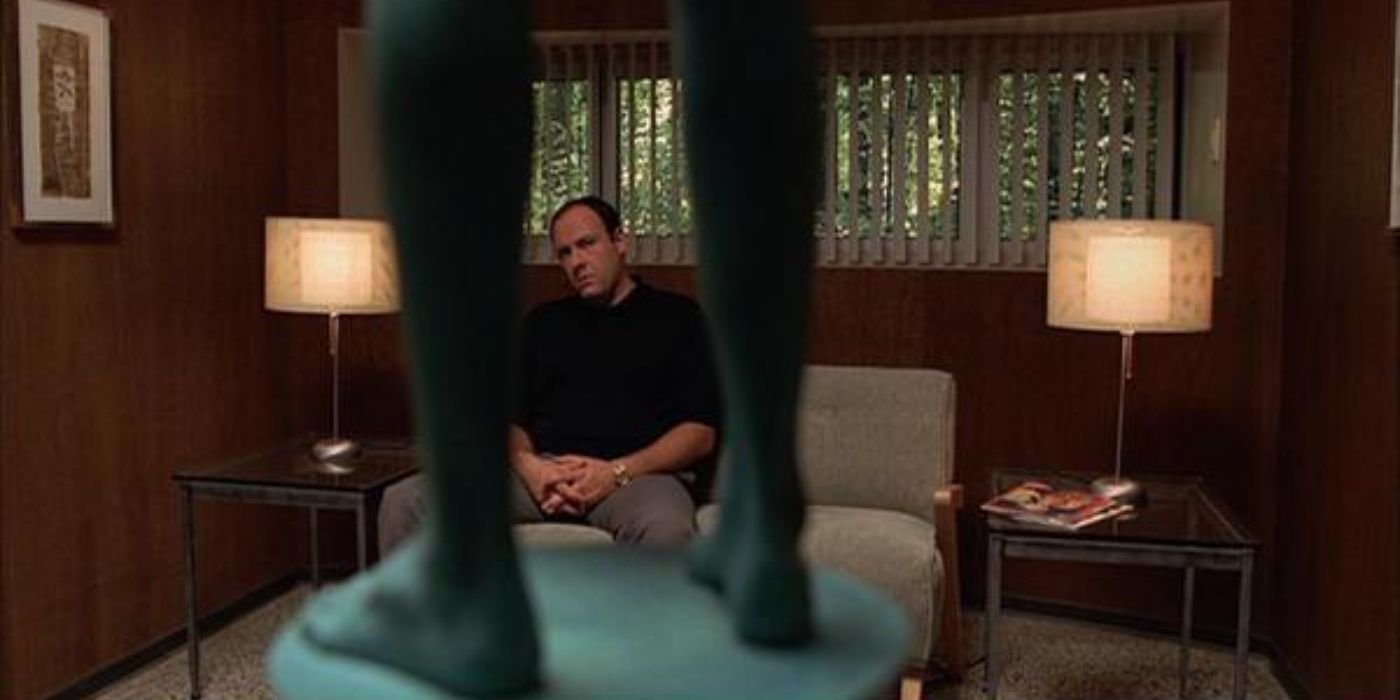 Tony Soprano is looked down upon (in judgement?) by a statue in his therapists office when he visits for the first time.
The thing that I love about it is that this set-up means you are constantly second-guessing Tony as a character. The therapy setting actively encourages us to do so. He commits awful acts of violence against others, and he relies on others to do the same as it is intrinsic to his business. Therapist Dr Melfi interrogates this. But is he lashing out as a result of ingrained trauma? Is there a path to his salvation? Can all these acts really be justified?
You will have different answers to these questions the more you watch the show.
The truth is that Tony Soprano does suffer from clinical depression. But he also cannot be excused for his actions. His depression does not absolve him of moral responsibility. The show does a great job of convincing you of Tony’s world view (“We’re soldiers. Soldiers don’t go to hell. It’s war. Soldiers kill other soldiers.”) before it forces you to reflect on his real morality. Despite what Tony manipulates the viewer into believing over the course of the show, depression does not excuse you from choking some guy to death because he’s a rat.
“When America opened the floodgates and let all us Italians in, what do you think they did it for? … They needed us to build their cities and subways and to make them richer. But some of us didn’t want to lose who we were.
We wanted to preserve the important things: Honor and family and loyalty. Some of us wanted a piece of the action.”
“But what do poor Italian immigrants have to do with you and what happens every morning you step out of bed?”
I feel some of the ways depression and mental health is talked about these days among younger generations like my own mirror what Tony Soprano would have you believe.
You cannot use the phrase “personal boundaries” as if that relieves you of your obligations to others - it is not a reason with any intellectual or moral force, just as Tony Soprano cannot use the experience of peoples generations ago to excuse his own.
“It’s most important that you focus on you” means that you focus on your own wellbeing so you can get back into the world content and able to be there for other people. It is not a perpetual excuse to retreat from the obligations of society.
Over the course of the show Tony Soprano has every opportunity to escape the mob, stop harming those around him, make some positive difference to the world, and make his own salvation. In doing so he would escape the contradictory mental torment he lives in as a result of his work.
He chooses not to because he does not feel he has obligations to others. “These people go around thinking the world owes them a fucking living” he says.
But he is wrong. We do. We have to be there for others to make our salvation.